
The 140th Canton Fair is currently in progress. Phase 1 runs from October 15 to October 19, 2026, and focuses on advanced manufacturing, including electronics, appliances, machinery, vehicles, lighting, electrical products, hardware, tools and new energy categories. For a buyer arriving during the fair, the most useful question is not simply “Where is the Canton Fair?” It is “Which area and hall should I go to for the products I need today?”
The official fair information should remain the final reference for dates, product sections and any temporary venue arrangements. You can check the official Canton Fair exhibition schedule before leaving for the venue. The practical guide below connects the Phase 1 layout with the way an international buyer usually plans supplier meetings.
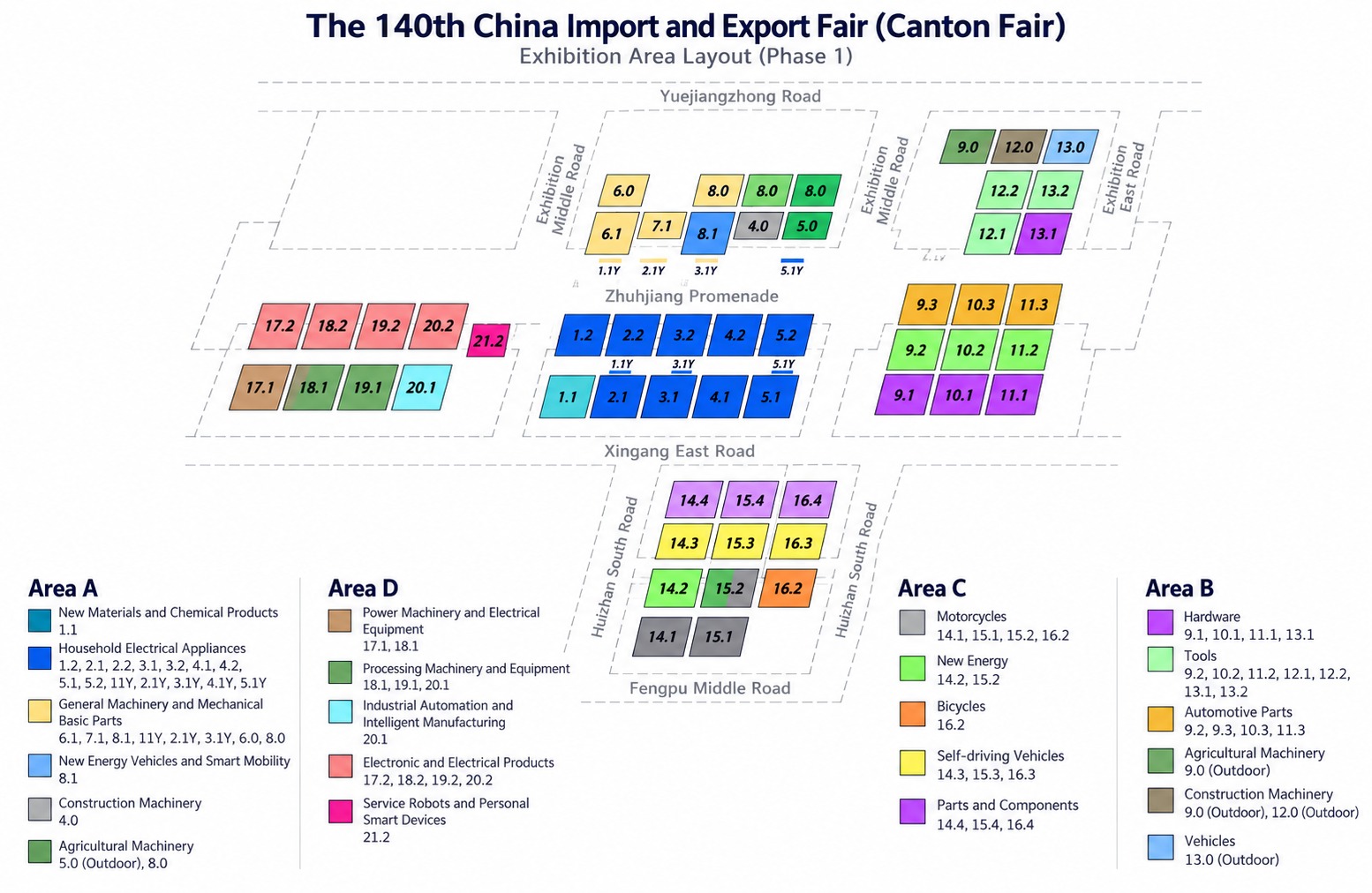
Start with the product family, not the nearest entrance
The Canton Fair complex is large, and the most convenient entrance depends on the product area you want to visit. If you begin with a general plan such as “walk around Area A,” you may spend valuable time crossing between halls that are not relevant to your buying list. Start with your product family, mark the related halls on the Phase 1 map and then build the day’s route around your priority meetings.
The map divides Phase 1 into four main areas. The hall numbers below are a route-planning reference based on the Phase 1 layout image. Buyers should still confirm the latest official signs, exhibitor information and on-site instructions on the day of the visit.
Area A: appliances, machinery basics and new energy mobility
Area A is a useful starting point for buyers whose projects combine consumer products with industrial or mobility-related categories. The main product groups shown on the Phase 1 layout include:
-
New materials and chemical products, including Hall 1.1.
-
Household electrical appliances across the 1.2, 2.1, 2.2, 3.1, 3.2, 4.1, 4.2, 5.1 and 5.2 groups, together with the relevant upper-level sections shown on the map.
-
General machinery and mechanical basic parts around the 6.1, 7.1, 8.1, 6.0 and 8.0 sections.
-
New energy vehicles and smart mobility, including the 8.1 section.
-
Construction machinery around Hall 4.0.
-
Agricultural machinery in the outdoor 5.0 section and Hall 8.0.
If your buying plan includes appliances and machinery at the same time, do not treat them as one undifferentiated supplier list. Prepare separate briefs for the consumer product and the industrial product. Their quotation units, testing questions, packaging requirements and after-sales expectations may be different even when the meetings happen in the same general area.
Area B: hardware, tools and vehicle-related displays
Area B is relevant for buyers comparing hardware, tools, vehicle spare parts and selected outdoor machinery or vehicle displays. The layout groups the following sections:
-
Hardware around the 9.1, 10.1, 11.1 and 13.1 sections.
-
Tools across the 9.2, 10.2, 11.2, 12.1, 12.2, 13.1 and 13.2 sections.
-
Automotive parts around the 9.2, 9.3, 10.3 and 11.3 sections.
-
Agricultural machinery in the 9.0 outdoor section.
-
Construction machinery in the 9.0 and 12.0 outdoor sections.
-
Vehicles in the 13.0 outdoor section.
For tools and hardware, bring a specification sheet that states the material or grade, dimensions, surface treatment, set composition, packaging and intended use. These details help you compare suppliers on the same basis. A lower quote may describe a different unit, a smaller set or a different packaging assumption rather than a genuinely lower cost.
For vehicle parts and outdoor machinery, leave more time for product information and supplier qualification. The products may be displayed outside the main indoor route, and the information you need may include model compatibility, material, replacement parts, packaging and shipping assumptions.
Area C: motorcycles, bicycles, lighting and electrical products
Area C is the main reference area for buyers looking at two-wheelers, lighting and several electrical product groups. The map identifies:
-
Motorcycles in the 14.1, 15.1, 15.2 and 16.2 sections.
-
New energy products in the 14.2 and 15.2 sections.
-
Bicycles in the 16.2 section.
-
Self-driving vehicles in the 14.3, 15.3 and 16.3 sections.
-
Parts and components in the 14.4, 15.4 and 16.4 sections.
Lighting and electronic and electrical products are also shown in the Phase 1 product group information. If your visit includes lighting, record the intended use environment, input or output requirements, materials, colour temperature where relevant, control method, packaging and replacement parts. A product photo alone is not enough to support a later quotation comparison.
Area D: power equipment, automation and service robots
Area D is especially relevant for industrial buyers and buyers looking for automation or service-robot solutions. The layout includes:
-
Power machinery and electrical equipment around the 17.1 and 18.1 sections.
-
Processing machinery and equipment around the 18.1, 19.1 and 20.1 sections.
-
Industrial automation and intelligent manufacturing around Hall 20.1.
-
Electronic and electrical products across the 17.2, 18.2, 19.2 and 20.2 sections.
-
Service robots and personal smart devices in the 21.2 section.
For machinery and automation, do not plan meetings only by product name. Add the production use case, required capacity, power supply, control method, installation conditions, documentation and after-sales expectations to the brief. This gives the supplier a clearer basis for recommending a model and helps your team distinguish a standard product from a project-specific solution.
How to plan a practical Phase 1 route while the fair is open
First, divide the buying list into priority products, comparison products and trend products. Priority products should have scheduled supplier meetings. Comparison products need two or more suppliers using the same specification. Trend products can be reviewed when time allows, without taking time away from the first two groups.
Second, group meetings by area. If your schedule includes Area A in the morning and Area D in the afternoon, avoid adding a short appointment in Area C between them unless there is a clear commercial reason. The walking time, security checks, product photography and note-taking can take longer than expected during the fair.
Third, prepare a simple record for every supplier. Record the booth or hall reference, supplier name, product code, quotation basis, minimum order quantity, sample status, packaging, lead time, quality questions and next action. Photograph the product and its identifying information together where possible.
Fourth, keep a route backup. If a supplier changes the meeting time or a hall becomes difficult to access, move to another pre-screened supplier in the same area instead of walking randomly through the entire complex.
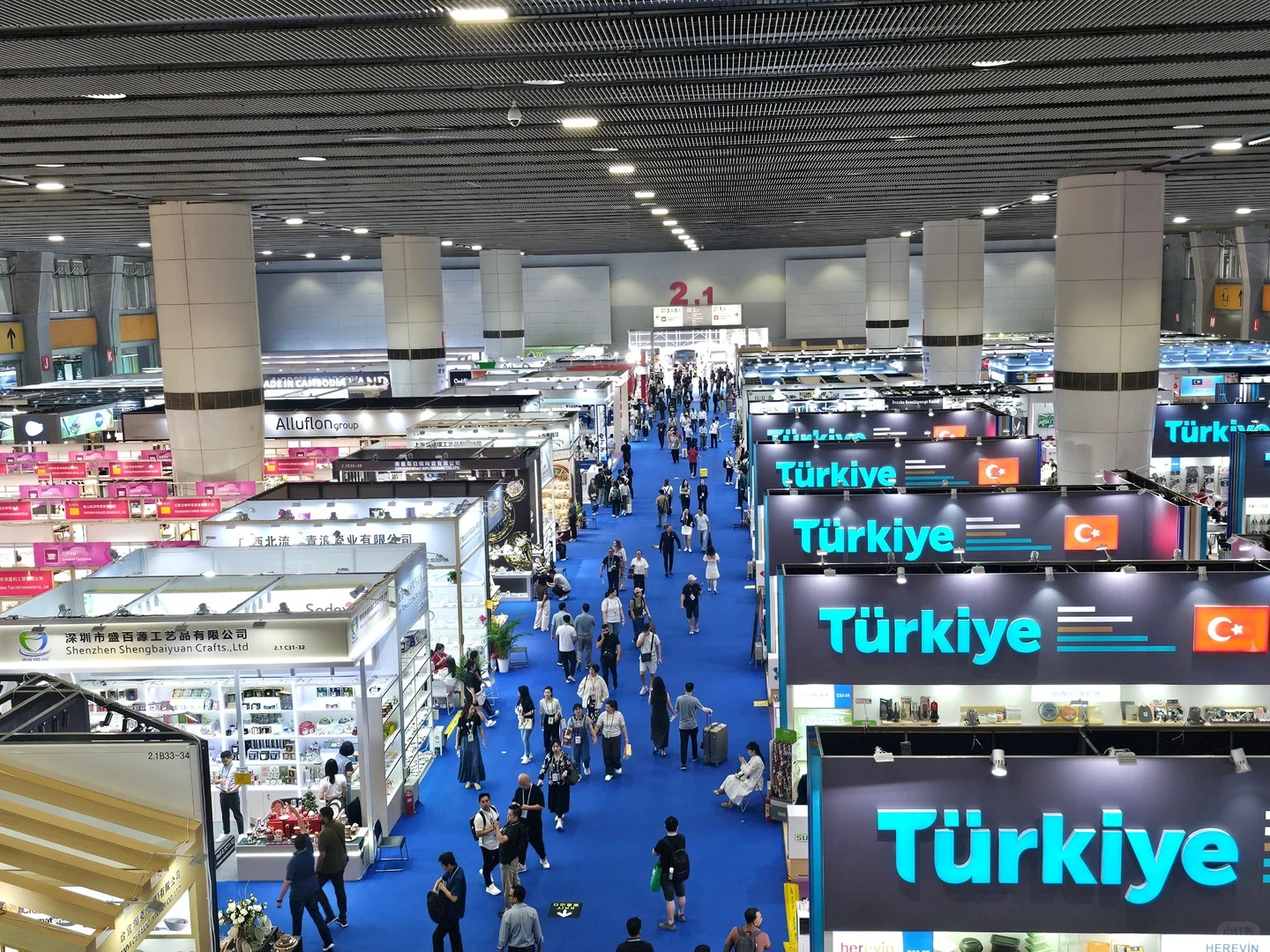
How MU Group can support buyers during the Canton Fair
Some buyers can navigate the map independently. Others need help turning the map into a working sourcing route. MU Group’s Canton Fair buyer support includes booth guidance, an all-category showroom, Guangzhou market assistance, multilingual interpreting and transport coordination listed on the official service page.
The practical value of an on-site companion is not only showing a buyer where a hall is located. The support can connect the product brief, the hall route, supplier conversations and the next sourcing step. Depending on the appointment plan, the team can help buyers prioritize booths, clarify product information, organize notes and connect the fair visit with showroom or market follow-up. These arrangements should be confirmed in advance because the route and timing depend on the buyer’s product list and schedule.
MU Group can also connect a Canton Fair visit with sourcing work in other locations. Buyers who need follow-up with teams in Guangzhou, Ningbo, Shantou or Yiwu can review the MU Group branch office network and discuss the appropriate route before making appointments. The aim is to turn a short exhibition visit into a more controlled procurement process, rather than treating the fair as a standalone walk-through.
This is part of MU Group’s broader integrated supply chain and procurement services, which may include market research, data analysis, product development and design, procurement management, packaging design, product testing and quality control, international logistics coordination and after-sales support. The exact scope should be matched to the buyer’s project and confirmed during planning.
Frequently asked questions from buyers at Phase 1
Which Canton Fair area should I visit for electronics and appliances?
Start with Area A for household electrical appliances and related machinery sections. Also review the Phase 1 product list and the latest official venue information because electronics and electrical products appear across the Phase 1 category layout, including Area C and Area D sections.
Where should I go for hardware and tools?
Area B is the main route-planning reference for hardware and tools. Use the hall numbers on the current Phase 1 layout, then confirm the entrance, signs and booth information when you arrive.
Which area covers industrial automation and intelligent manufacturing?
The Phase 1 layout places industrial automation and intelligent manufacturing in Area D, around Hall 20.1. Prepare technical questions before the meeting so that the discussion covers the production application, capacity and control requirements rather than only the product appearance.
Can MU Group accompany a buyer inside the Canton Fair?
MU Group lists Canton Fair booth guidance and multilingual interpreting among its buyer services. The team can help organize a route and supplier-visit plan according to the buyer’s product list and confirmed appointment schedule. Buyers should contact the team before the visit to confirm the available arrangement.
Do I need to visit every area to find China suppliers?
No. A focused route is usually more useful than trying to cover every hall. Start with your product category, rank the suppliers you need to meet and leave time for comparison records, samples and questions that cannot be answered at the booth.
What to do before entering the complex today
Check the official Phase 1 date and category information. Mark the halls related to your highest-priority products. Put the same product brief and supplier-record fields in the hands of everyone on your buying team. Confirm meetings and allow time for security checks, walking, product photography and notes.
If the layout, language or supplier route is difficult to manage alone, arrange support before you leave for the venue. A short discussion with MU Group can help connect the Canton Fair route with showroom review, Guangzhou market visits and the next stage of procurement. For more current sourcing topics, buyers can also browse MU Group’s latest articles and insights.