
Why Canton Fair 2026 Phase 1 needs a product-level plan
The first phase of the 140th Canton Fair will take place in Guangzhou from October 15 to October 19, 2026. The official exhibition categories include household electrical appliances, consumer electronics and information products, industrial automation and intelligent manufacturing, processing machinery, vehicles and two-wheelers, lighting and electrical products, new energy, hardware and tools.
For an overseas buyer, the phase name is only the starting point. A productive visit depends on whether each meeting is connected to a clear product requirement, a way to compare suppliers and a decision about what should happen after the fair. Walking through Phase 1 without those records can produce many conversations but very little usable purchasing information.
This guide explains what buyers should confirm before and during a Phase 1 supplier meeting, especially when they are reviewing electronics, appliances, lighting, electrical products, hardware or tools.
Read the Phase 1 layout before entering the complex
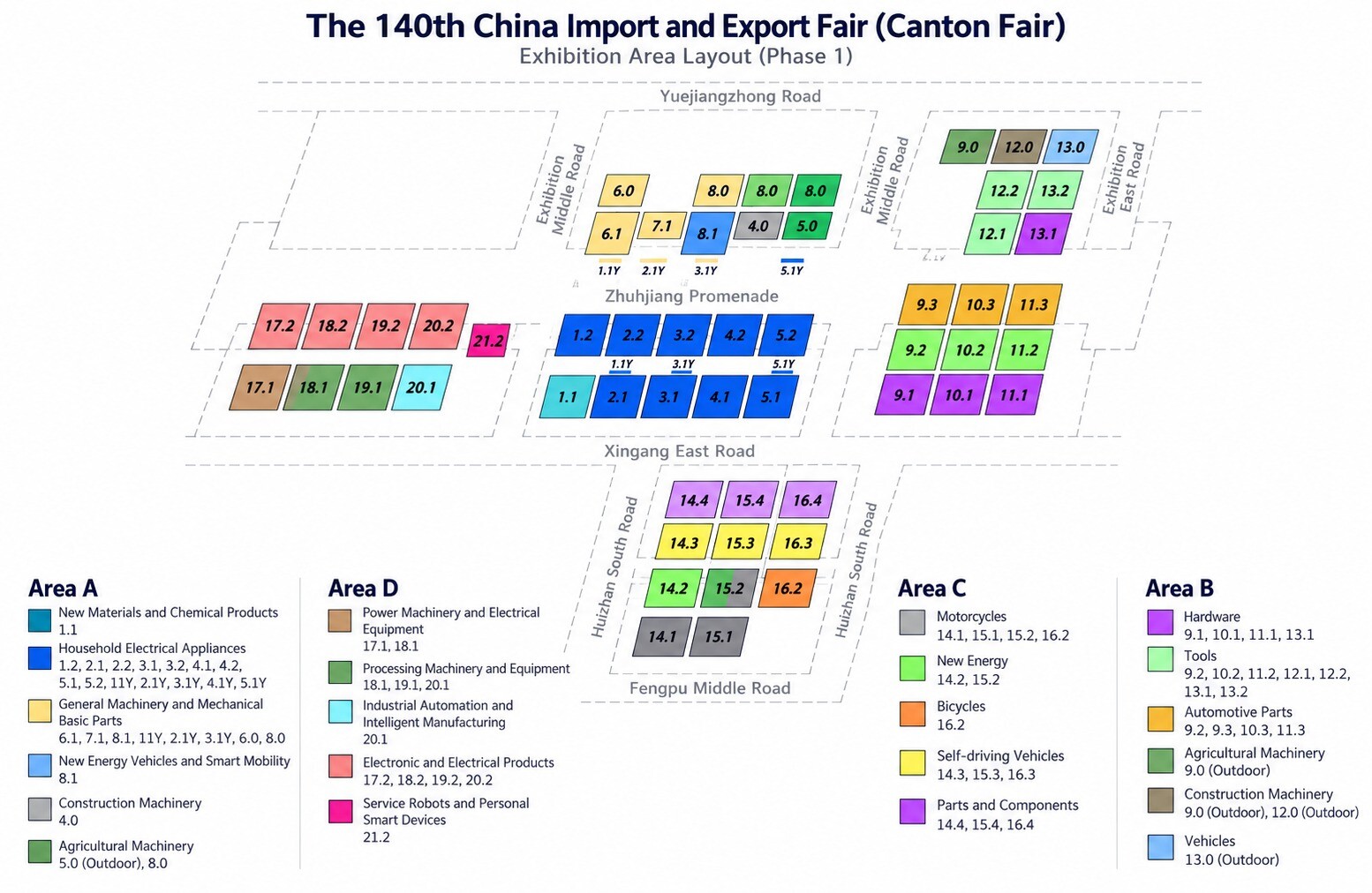
The Phase 1 layout is divided into four main areas: Area A covers Halls 1–8, Area B covers Halls 9–13, Area C covers Halls 14–16, and Area D covers Halls 17–20. The area labels are more useful when they are connected to the product list that the buyer prepared before the trip.
The Phase 1 layout reference used for route planning groups household electrical appliances, consumer electronics, machinery, new energy vehicles and related industrial categories across Areas A and D. Area B is useful for hardware, tools, vehicle spare parts and vehicle-related displays. Area C includes motorcycles, bicycles, electronic and electrical products, lighting equipment and new energy. The exact hall or booth assignment should be checked against the latest official guide and on-site signs because exhibition arrangements can be updated.
Do not plan the day by walking from one area to another at random. Mark the halls that match the product brief, group meetings by area where possible and leave time to record supplier information. The supplied Phase 1 layout image can be used as a route-planning reference, but it should not replace the latest official exhibition map.
Choose between taxi convenience and metro predictability
Many overseas buyers will choose a taxi or ride-hailing car because it offers door-to-door convenience, especially when they are carrying luggage, samples or product materials, or travelling with colleagues. Share the exact area, hall and gate with the driver before leaving. Road access and drop-off points may be adjusted during the fair, so allow extra time and follow the traffic instructions near the complex.
Metro Line 8 remains a useful backup when roads are congested or temporary traffic controls affect car access. The buyer-guide route reference identifies Xingangdong Station Exit A for Areas A and D. Pazhou Station serves Area B through the exits shown in the guide, while Pazhou Station Exit C is the reference point for Area C. Exit information and temporary signs may change during the fair, so check the latest official guide and venue signs on the day.
From Guangzhou South Railway Station, a common rail route is Line 2 to Changgang and then Line 8 toward the exhibition area. From Baiyun International Airport, buyers should check the current taxi route or metro transfer information before departure rather than relying on a fixed travel-time estimate. For a first visit, a practical approach is to use a taxi for the first appointment and keep the metro route as a backup for later movements between exhibition areas.
Start with the product list, not the booth list
Before opening the exhibitor directory or booking meetings, divide the buying list into three groups. The first group should contain products that are ready for supplier discussions. The second should contain products that need design, specification or market research before a quotation can be compared. The third should contain ideas that are useful for discovery but are not ready for an order decision.
For every product in the first group, prepare one short product brief. It should describe the application, target market, main dimensions, materials, functions, colour or finish, packaging expectations, target order quantity and expected ready date. For electronics and appliances, also record the model, power requirements, operating environment, warranty expectations and any market-specific testing or labelling questions.
For lighting and electrical products, clarify the use environment, input or output requirements, materials, colour temperature where relevant, control method, packaging and replacement parts. For hardware and tools, record the use case, dimensions, materials, surface treatment, performance expectations, packaging and whether the product is sold as a single item, set or kit.
The purpose of the brief is not to make every requirement final before the fair. It is to give every supplier the same starting point, so a later comparison does not mix different specifications.
Match the meeting plan to the Phase 1 categories
Phase 1 covers several different buying situations. An electronics meeting may focus on model configuration, components, software or firmware, power specifications, testing records and after-sales handling. A lighting meeting may focus on performance, materials, packaging and market requirements. A hardware meeting may focus on material grade, dimensions, finishing, tooling and repeat-order capacity.
Do not use one generic question list for all of them. Create a small set of category-specific questions and add them to the product brief. Ask each supplier to respond to the same core fields, then record which answers are confirmed, which are estimated and which require documents or samples.
Prioritize meetings in Guangzhou
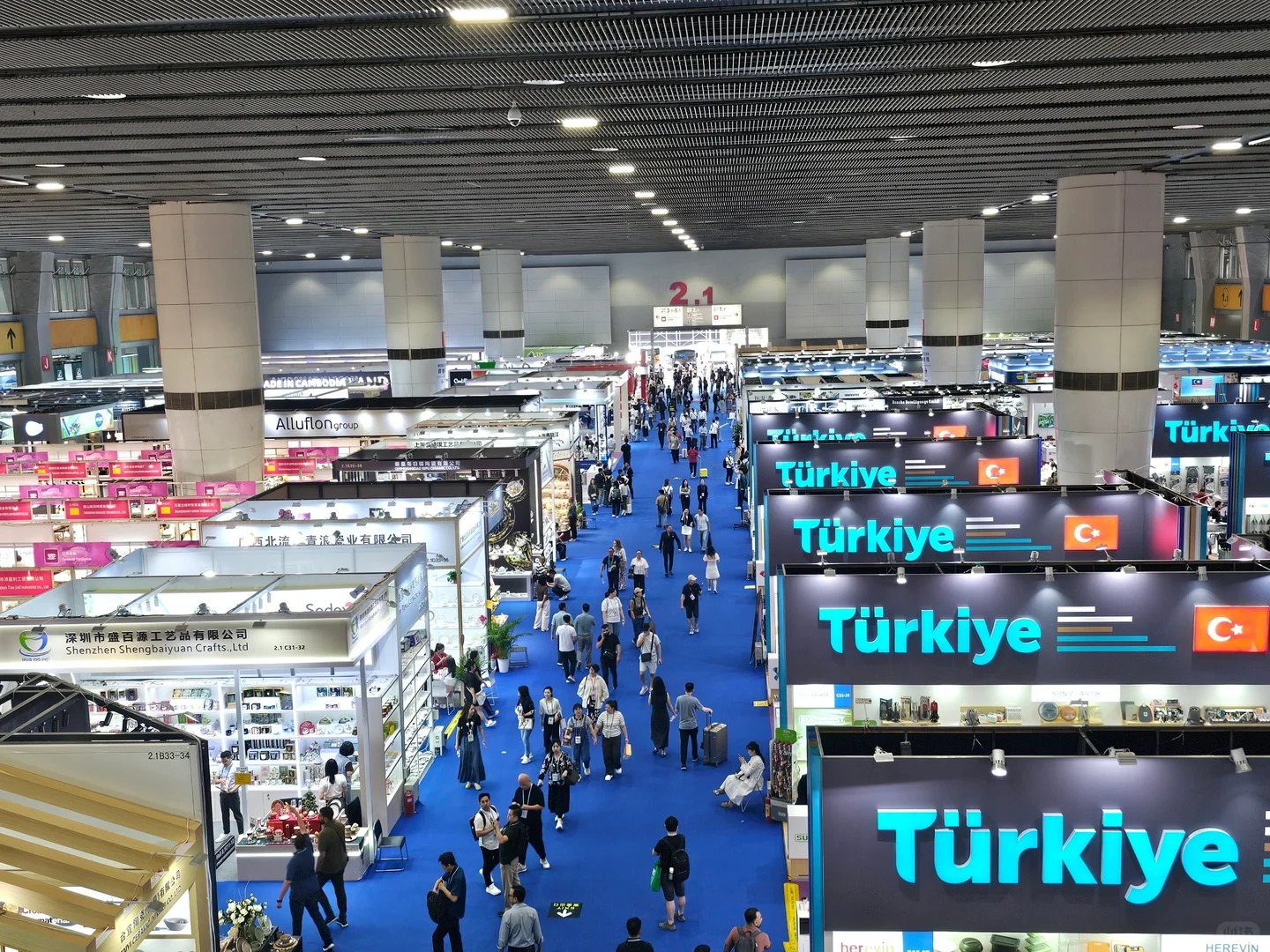
The fair is large enough that an unplanned walk can quickly consume the time needed for serious discussions. Divide the schedule into priority meetings, backup meetings and open research time. A priority meeting should have a clear product brief and a defined decision to make, such as whether to request a sample, compare a revised quotation or arrange a factory follow-up.
Send the key requirements before the meeting when possible. This allows the supplier to prepare a more useful answer and helps the buyer identify questions that cannot be solved at the booth. Keep travel time between halls and appointments realistic. A schedule that leaves no time for notes often creates gaps in supplier comparison later.
MU Group’s Canton Fair support includes booth guidance, Guangzhou market assistance, multilingual interpreting and other buyer services. Buyers who need help connecting meetings with a wider purchasing route can review the MU Group Canton Fair support page before finalizing their itinerary.
What to confirm at an electronics or appliance booth
A product photo and a low quotation are not enough to make an electronics or appliance supplier comparable. Confirm the exact model, configuration and version. Ask which components are included, what the power or voltage requirements are, and whether the quoted product is a standard model or a customized version.
Ask for the documents that apply to the specific model and target market. A general company certificate does not automatically prove that every product or version meets every market requirement. The buyer should record what has been shown, what still needs verification and who is responsible for providing the next document.
Also clarify sample availability, sample changes, tooling or customization costs, packaging, warranty handling, spare parts and the process for reporting defects. These details can affect the real purchasing decision more than the first unit price.
What to confirm at a lighting, electrical or hardware booth
For lighting and electrical products, compare the technical specification and intended use before comparing prices. Record the product code, key performance fields, materials, packaging, testing or labelling questions and the supplier’s proposed sample. If the product will be sold under a private label, ask how artwork, packaging files and approval samples will be handled.
For hardware and tools, confirm dimensions, material or grade, surface treatment, set composition, packaging and production capacity. If several suppliers quote similar tools, make sure they are using the same unit, set definition and packaging assumption. Otherwise, a lower quotation may simply describe a smaller set or a different specification.
Take photos together with records
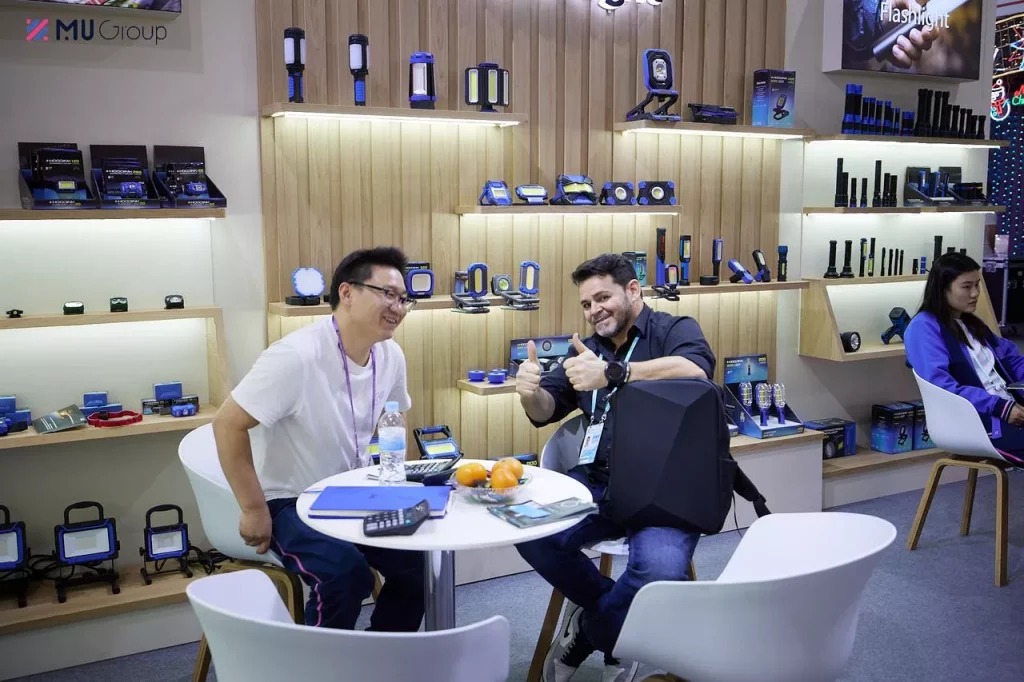
Photographs are useful only when the buying team can identify what each image shows. Photograph the product, product code, specification sheet and booth information together where possible. Record the supplier name, contact person, quotation basis, sample status, promised files and next action immediately after the conversation.
If a supplier shows a revised sample or a new configuration, mark that change clearly. Do not rely on memory to distinguish similar products after several halls and meetings. A structured record also makes it easier for a purchasing team that did not attend the fair to review the shortlist.
Turn fair conversations into a controlled follow-up
The first Phase 1 meeting should end with a specific next step. Depending on the project, that may be a sample request, a technical document request, a revised quotation, packaging artwork review, a factory visit or a quality-control discussion. Set a reasonable date for the response and keep the same product brief attached to the follow-up.
For multi-supplier projects, use one comparison format across all Phase 1 contacts. Separate confirmed information from assumptions. Track product specification, sample status, packaging, minimum order quantity, lead time, quality-control requirements and logistics notes in the same record. This gives the buyer a clearer basis for deciding which suppliers should continue to the next stage.
Connect Phase 1 sourcing with the wider supply chain
The fair is a discovery and meeting stage, not the end of the purchasing process. After the event, buyers may still need product development and design, quotation alignment, sample coordination, packaging review, product testing, quality control and international logistics coordination. MU Group’s integrated supply chain and procurement services connect these steps with market research, data analysis, procurement management and after-sales support.
For projects involving several product categories, this connection also helps align carton information, ready dates, quality-check points and shipment planning before goods move into consolidation. Buyers can review MU Group’s integrated supply chain and procurement services to understand how the work can continue after the Phase 1 meetings.
What to prepare before October 15
Before travelling to the fair, confirm that your team has matched its categories to Phase 1, prepared a product brief for every priority item, grouped supplier meetings by importance and defined the information required before sampling or quotation review.
Prepare a simple record template with fields for supplier identity, product code, specification, quotation assumptions, sample status, documents, packaging, lead time, quality requirements and next action. Make sure every person on the buying team uses the same fields.
Finally, decide how you will review the results after returning home. The most useful Phase 1 outcome is not the largest number of business cards. It is a shortlist of products and suppliers supported by comparable information, clear next steps and a purchasing process that can be checked after the exhibition.
For more China sourcing guidance after the fair, buyers can also browse MU Group latest articles and compare the topics with the requirements of their own project.