
Why combine the Canton Fair with a Yiwu sourcing route
The Canton Fair and Yiwu International Trade City are useful for different parts of a China sourcing trip. The fair creates a focused schedule for meeting exhibitors and reviewing products by category. Yiwu can extend that work by helping buyers explore a wider mix of small commodities, compare alternatives and identify products that may not fit neatly into one exhibition phase.
The 140th Canton Fair is scheduled in Guangzhou in three phases: Phase 1 from October 15 to 19, 2026, Phase 2 from October 23 to 27, 2026, and Phase 3 from October 31 to November 4, 2026. Buyers should confirm the latest schedule and registration information on the official Canton Fair website before making travel arrangements.
A two-stop route should not be treated as two unrelated visits. The best results come when the same product brief, supplier record and comparison criteria are used in Guangzhou and Yiwu. That makes it easier to separate a promising product from a promising supplier and to decide what needs sampling, factory verification or further market research.
Use the Canton Fair phases to set the first priorities
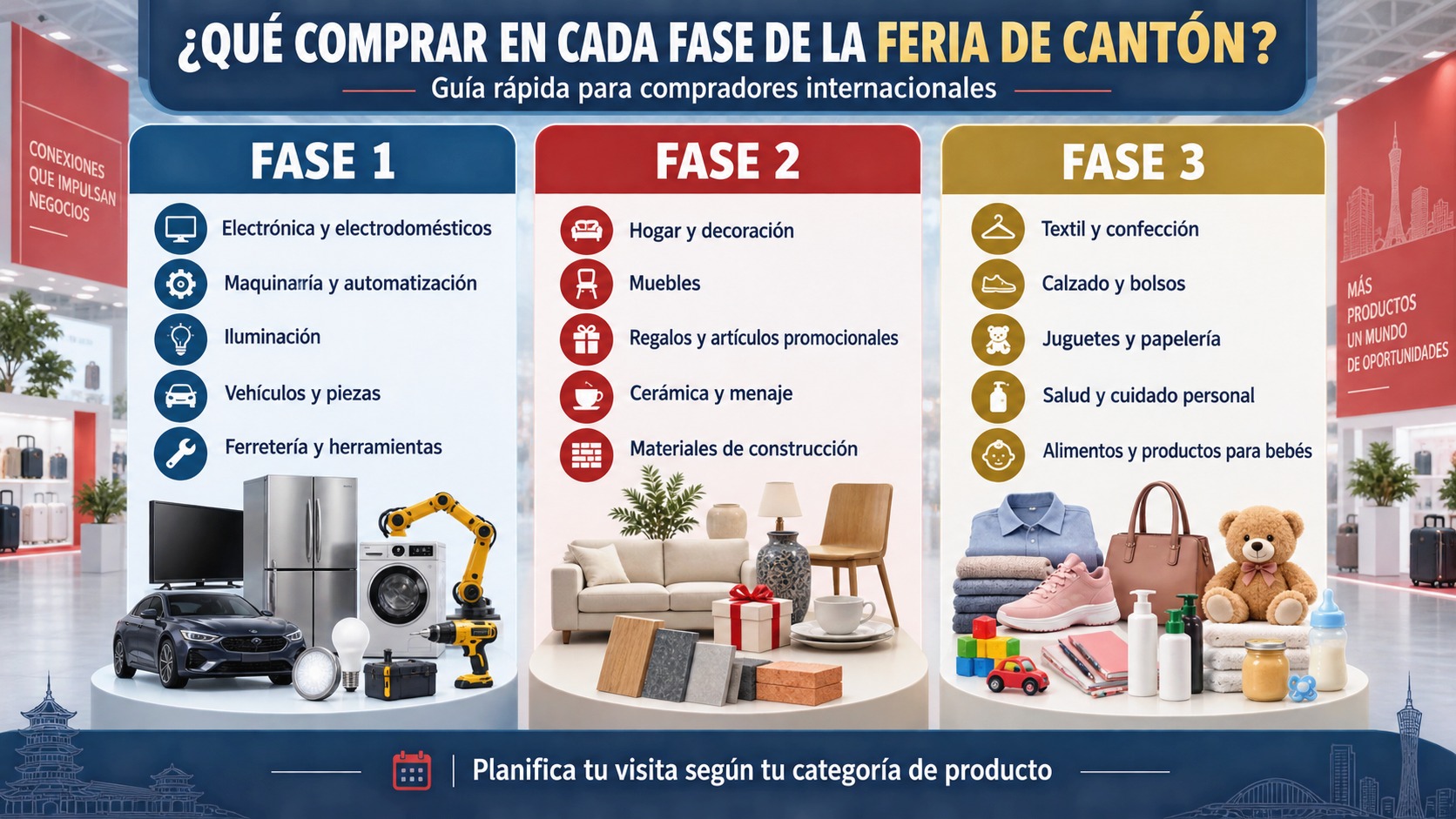
The Canton Fair remains the starting point for the route because its phases help buyers organize meetings. Phase 1 covers advanced manufacturing and categories such as electronics and appliances, manufacturing, vehicles and two-wheelers, lighting, hardware and tools. Phase 2 focuses on quality home life, including housewares, home decoration, furniture, gifts, ceramics, kitchenware, building materials and garden-related products. Phase 3 covers better life categories such as textiles and clothing, shoes and bags, toys and stationery, personal care, baby products, sports and leisure products and food.
These phase descriptions are useful for building the first meeting list, but they should not replace product-level preparation. For each priority product, record its application, target market, dimensions, materials, packaging, estimated order quantity, testing or labelling needs and expected ready date. The same information should be used when comparing products found in Yiwu.
Plan Guangzhou as a meeting route
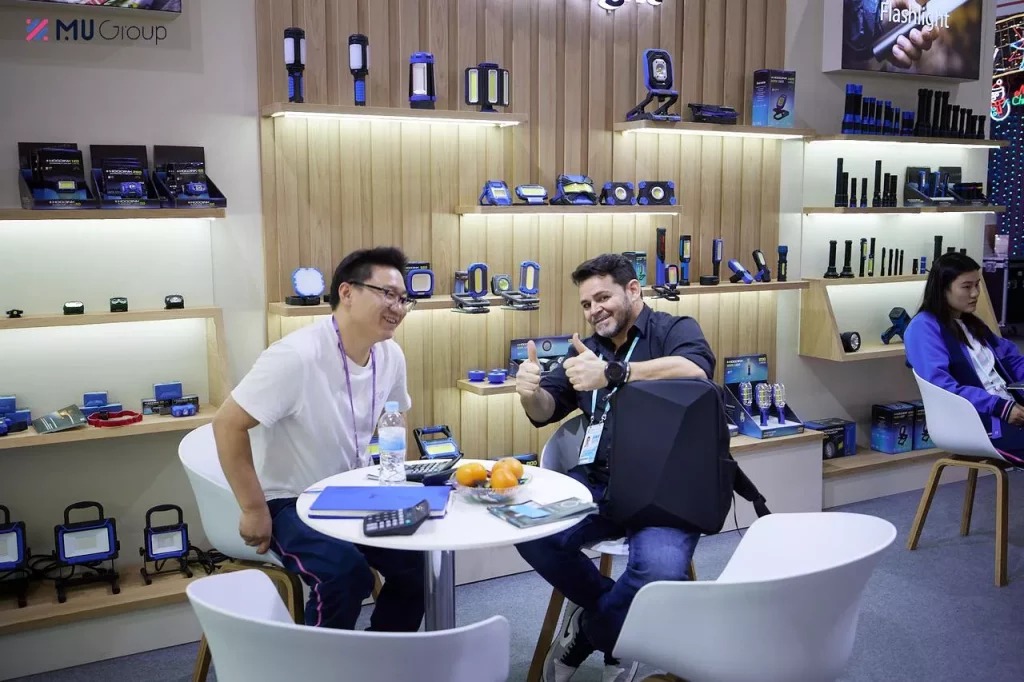
In Guangzhou, the main task is not to walk through every available booth. It is to protect time for the suppliers and products that matter most to the project. Group appointments into priority meetings, backup meetings and open research time. Send a concise product brief before a priority meeting and ask suppliers to respond to the same requirements.
At each meeting, record the product code, supplier role, contact person, quotation assumptions, sample status, promised documents and next action. Keep product photographs with these notes. A photo without a product code or specification is difficult to compare after the trip.
This meeting-first approach is especially useful when buyers plan to continue to Yiwu. It prevents the second stop from becoming a separate collection of unstructured product photos and business cards.
Use Yiwu for category expansion and alternative comparison

Yiwu is often more useful after the buyer has defined the gaps in the product list. A buyer may use the market to expand a small-commodity range, compare packaging or colour options, find complementary products or test whether a category deserves a deeper supplier search. The market visit should begin with a route based on categories and priorities, rather than an unplanned walk.
The aerial view of Yiwu International Trade City in this article represents the scale of the market and the need for route planning. Before entering the market, decide which categories need the most time, which areas should be visited first and how supplier and product information will be recorded. A market display is a useful discovery signal, but it is not by itself proof that a factory has been verified or that a product is ready for a specific market.
The order of the two stops depends on the project. Some buyers should meet priority exhibitors in Guangzhou first and then use Yiwu to fill category gaps. Others may begin with market research, create a shortlist and use the Canton Fair for focused supplier meetings. In either case, leave enough time for sample review and quotation comparison instead of scheduling every hour as travel time.
Turn two stops into one purchasing process
The trip is only the discovery stage. After Guangzhou and Yiwu, the buying team still needs to compare suppliers, confirm specifications, review samples, check packaging, plan quality control and organize shipment information. MU Group’s integrated supply chain and procurement services connect market research, data analysis, product development and design, procurement management, packaging design, product testing and quality control, international logistics coordination and after-sales support.
For a multi-category project, use one comparison format across both locations. Keep confirmed information separate from estimates, and give every priority supplier a next action. This helps the buyer decide whether a market contact should move to sampling, supplier verification or simply remain on the research list.
Plan consolidation while the route is still being defined
When products come from Guangzhou, Yiwu and other locations, decide early whether goods will be received at a warehouse for checking and consolidation. Confirm the SKU, carton quantity, carton dimensions, packaging requirements, ready date and quality-check point for each supplier. Then compare the suitability of a full-container shipment, a mixed-container arrangement or another logistics option using confirmed cargo information.
Consolidation affects more than transport. It also affects warehouse receiving, carton identification, packing lists, quality-control timing and communication with suppliers. Aligning these fields before the goods are ready reduces avoidable gaps between product discovery and shipment execution.
How MU Group can support a two-stop route
MU Group helps international buyers connect market visits with a controlled procurement process. Before travel, the work can include market research, product brief preparation, supplier shortlisting and meeting planning. During the route, the focus can be product comparison, supplier communication and structured record keeping. After the route, the process can continue with sampling, quotation alignment, quality-control planning, packaging review, consolidation and international logistics coordination.
Buyers can review MU Group’s integrated supply-chain services, learn more about MU Group Canton Fair support and use MU Group latest articles for additional China sourcing guidance. These references are placed in the relevant service and route-planning paragraphs so that readers can continue researching the specific step they are considering.
A practical route-planning checklist
Before confirming the trip, define the job of each stop. Use the Canton Fair for focused exhibition meetings and use Yiwu for category expansion, product discovery and alternative comparison. Prepare one product brief, one supplier record and one comparison method for both locations.
Before moving a product to sampling or quotation review, confirm what is known and what is still an assumption. Check the product specification, packaging, sample status, supplier identity, quality-control requirement and next action. If several suppliers will ship through one logistics plan, collect carton and ready-date information early enough to evaluate consolidation.
The value of a Guangzhou and Yiwu route is not the number of contacts collected. It is the ability to turn fair meetings and market observations into comparable product decisions, controlled supplier follow-up and an executable purchasing plan.