
Why international buyers visit Foshan for furniture sourcing
Foshan, especially the Lecong area, is a practical starting point for international buyers who want to explore furniture, home furnishings and related products in China. The market combines large showroom destinations, furniture exhibition centres and supplier visits. That makes it possible to compare styles and product positions during one sourcing trip, but it also creates a challenge: buyers need a route and a comparison method before they start collecting catalogues.
Different furniture destinations in Foshan serve different sourcing purposes. Some are better for comparing a wide range of styles, while others are more focused on Italian modern furniture, solid wood, walnut, new Chinese aesthetics or value-focused collections. Buyers should use these style directions to plan their route, then verify the exact supplier, SKU and production details before ordering.
Use the Foshan furniture market map as a starting point
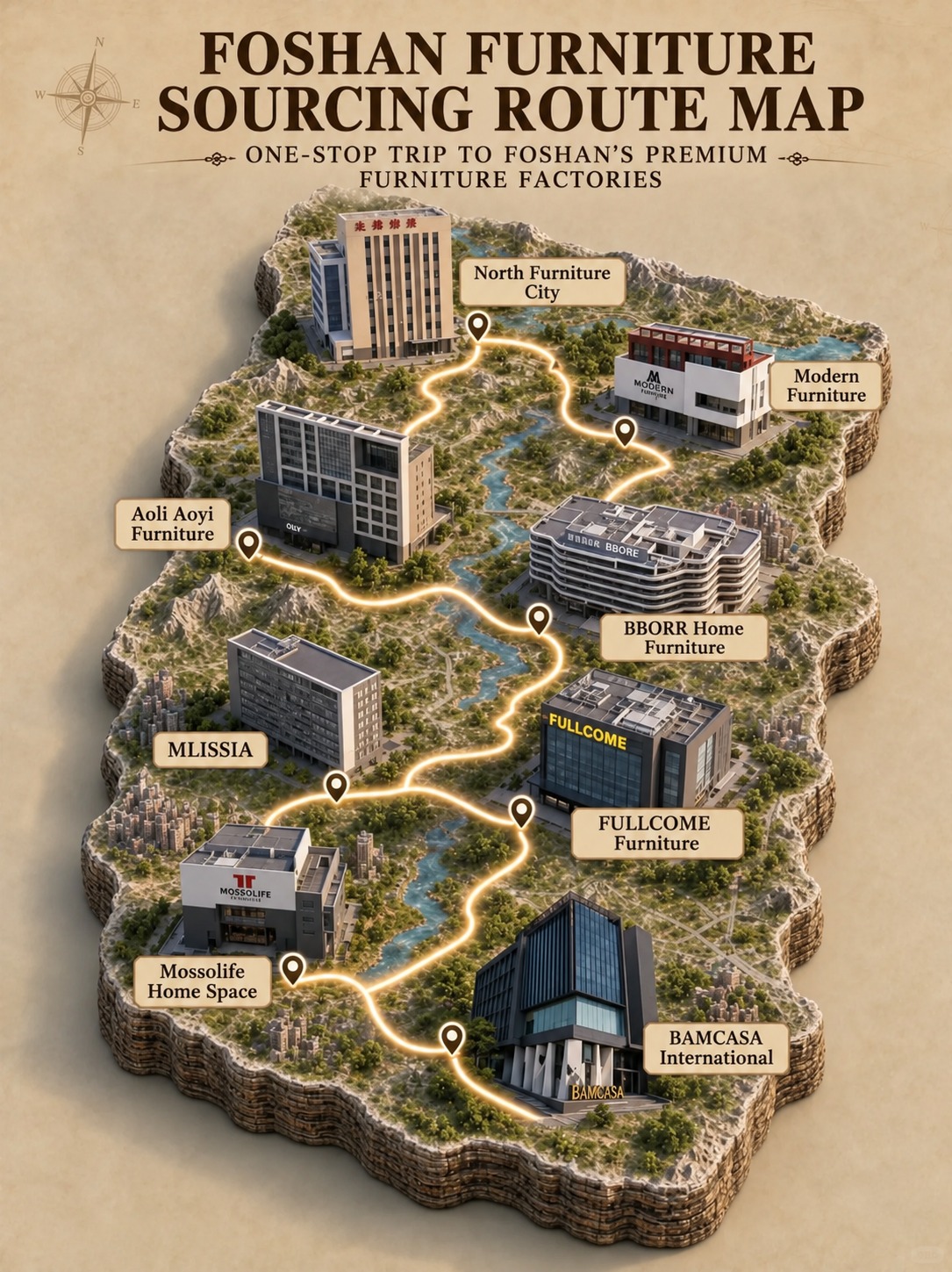
The furniture-market route map gives overseas buyers a visual starting point for a multi-stop visit across Foshan’s furniture destinations. It is a planning illustration rather than a replacement for current address, opening-hour or appointment checks. Before travelling, confirm the exact showroom location, whether the supplier accepts overseas visitors and whether a factory visit needs to be booked in advance.
For each stop, record the product code, material, dimensions, finish, packaging method and supplier contact. Keep photographs with written notes so that the buying team can still identify the product after returning home.
What styles can buyers explore in different Foshan destinations?
All-category showroom destinations for first-time comparison
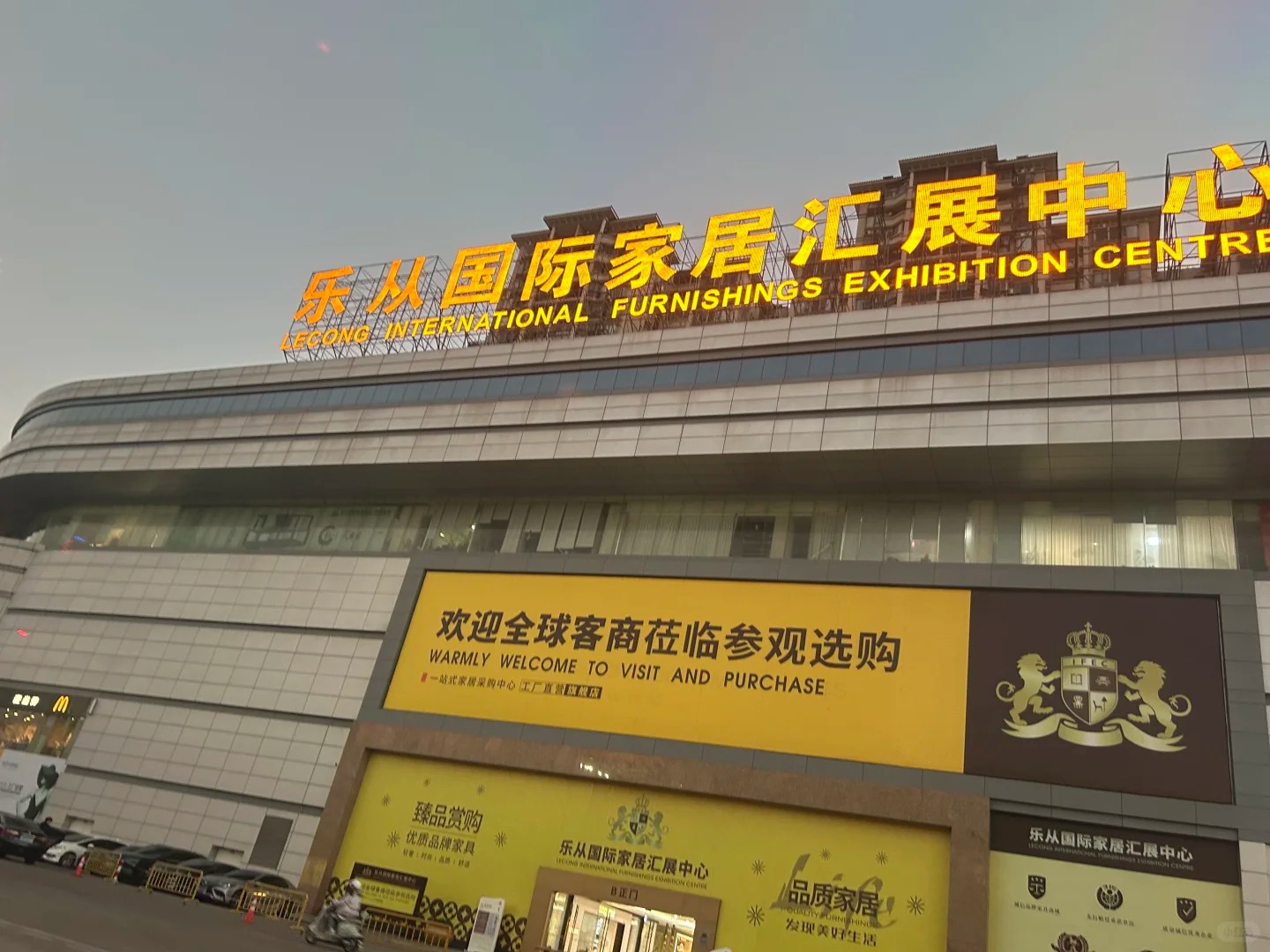
The exterior view of Lecong International Furnishings Exhibition Centre reflects the kind of concentrated furniture destination that many overseas buyers use as a first stop. Large destinations such as Louvre-style furniture exhibition centres are useful for understanding the range of furniture styles, materials and price positions. They can help a buyer establish a design reference before choosing which suppliers deserve a sample review. A showroom visit is a discovery step, not proof of factory capability or repeatable quality.
Italian modern, light luxury and quiet-luxury directions

The grand interior of a Foshan furniture exhibition centre is typical of the design-led showroom environment where buyers can compare Italian minimalism, light luxury, modern lines and quiet-luxury interiors. These styles may be relevant to buyers developing apartment, villa, hospitality or premium home collections. During a visit, focus on the details that affect repeat orders: frame construction, leather or fabric specification, hardware, stitching, surface finishing, customization limits and packaging protection.
American, French and other solid-wood styles
Foshan also has sourcing directions for buyers looking for American-style, French-style or other solid-wood furniture. This direction is useful when the project depends on visible wood grain, durable construction, classic proportions or a more substantial home interior. Buyers should confirm the actual wood species, material grade, moisture handling, finish, joinery, hardware and documentation for the specific model rather than relying on a general showroom description.
Modern simplicity, cream tones and value-focused collections
Modern-simple, cream-tone and more accessible home-furnishing collections are another useful direction for buyers visiting Foshan. These styles can suit rental upgrades, first-home projects, e-commerce collections and buyers who need coordinated furniture at a controlled product cost. The comparison should still cover materials, dimensions, packaging, minimum order quantity, sample quality and the supplier’s ability to repeat the same specification.
Walnut, new Chinese and Song-inspired aesthetics
For buyers interested in walnut, new Chinese or Song-inspired aesthetics, the Foshan market offers another clear style direction. A supplier visit should focus on material transparency and construction details. Ask whether the product uses solid wood, veneer or a combination, and request the material and finish information for the exact SKU. Product photographs, sample records and a written specification are especially important when several similar designs are compared across different showrooms.
How to turn style discovery into a sourcing shortlist
After each meeting, separate product comparison from supplier comparison. For the product, record material, dimensions, function, finish, packaging, customization and sample status. For the supplier, record production role, production location, production scope, minimum order quantity, sample process, lead time and quality-control process.
Ask priority suppliers to quote on the same specification. Confirm whether the price is per piece, set, carton or container quantity, and clarify what is included in export packaging, accessories, assembly parts, sample charges, tooling and delivery to the nominated warehouse or port.
How MU Group supports buyers after a Foshan market visit
For an overseas buyer, the difficult part often begins after the showroom visit. Product choices need to be checked against the target market, samples need to be reviewed, quotations need to be compared and different suppliers may need to be coordinated before shipment. MU Group’s integrated supply-chain and procurement services can connect product discovery with execution.
MU Group can support a furniture sourcing project by helping buyers organize product requirements, compare suppliers, coordinate sampling, review packaging information and plan quality-control follow-up. When a project includes several furniture or home categories, the team can also help keep SKU information consistent across suppliers and prepare the details needed for warehouse receiving and international logistics planning.
Plan consolidation and mixed-SKU shipments early
Furniture buyers often source several styles or related home categories in the same project. Before placing orders, map each SKU to its supplier, ready date, carton dimensions, packing method and quality-check point. If goods from different suppliers are to be consolidated, confirm carton data and receiving requirements early. A full-container or mixed shipment plan should be based on confirmed information rather than a preliminary estimate.
Sample, quality and packaging checks before shipment
Catalogue images cannot confirm the details that matter after shipment. Request a sample or a documented sample review for priority products. Check dimensions, materials, joints, hardware, surface consistency, colour, stitching where relevant, packaging protection and labelling. If the product is intended for a specific market, confirm the applicable product testing, safety or labelling requirements instead of relying on a general factory statement.
A practical checklist for international buyers
Before confirming a Foshan furniture supplier, make sure you have a comparable product specification, a written quotation basis, sample or sample evidence, packaging information, an estimated ready date, a quality-control plan and a clear next action. Keep product photographs with the product code and supplier notes. If several suppliers are involved, keep one comparison sheet for every SKU and record assumptions separately from confirmed information.
With the right preparation, a Foshan furniture market visit can become more than a showroom tour. It can become the first step in a structured sourcing project supported by product research, supplier verification, purchasing management, consolidation and international logistics follow-up.
MU Group supports buyers with integrated supply-chain services, MU Group Canton Fair support and MU Group latest articles.
MU Group supports buyers with integrated supply-chain services, MU Group Canton Fair support and MU Group latest articles.