
Every few weeks, a procurement manager somewhere types “supply chain management company ranking” into a search bar, hoping a clean list will appear — one that tells them who the top ten providers are, in order, so they can simply pick number three and move on.
That list does not exist. And the sooner a buyer accepts this, the faster they will find a partner who actually fits their business.
This is not a dodge. It is the central argument of this article: the reason no reliable universal ranking exists is that “best” in supply chain management depends almost entirely on what you buy, where you sell, how many SKUs you manage, and how much risk you can absorb. A provider that is ideal for a European supermarket chain consolidating 400 SKUs from dozens of factories is not the same provider that suits a small importer moving two containers a year.

Forklift loading consolidated cartons beside open containers at a covered dock
What follows is not a fabricated league table. It is a practical framework for comparing providers — the criteria that separate strong partners from weak ones — along with a look at how different types of providers, including integrated China-based groups like MU Group, position themselves against those criteria.
Why There Is No Single “Ranking” of Supply Chain Management Companies
Search for a ranking and you will find a handful of lists published by consultancies, trade magazines, and industry bodies. They are not useless, but they measure different things. Some rank by revenue. Some rank by geographic reach. Some rank logistics firms, others rank procurement and sourcing firms, and still others rank technology platforms. Very few disclose a methodology that a buyer could actually apply to their own shortlist.
The deeper problem is that supply chain management is not one service. It is an umbrella covering product development, supplier sourcing, quality control, order consolidation, warehousing, customs compliance, and freight. A company can be world-class in freight and mediocre in factory quality inspections. A ranking that averages those capabilities into a single score hides exactly the information a buyer needs.
Consider two importers. The first sources seasonal home goods from a dozen small factories across three Chinese provinces and needs someone to consolidate, inspect, and load mixed containers. The second buys a single high-volume electronics category and mainly needs reliable freight and customs clearance. The “top ranked” provider for the second may be entirely wrong for the first. A ranking built for one buyer is noise for the other.
This is why experienced procurement teams rarely start from a ranking. They start from their own pain points and work backward.
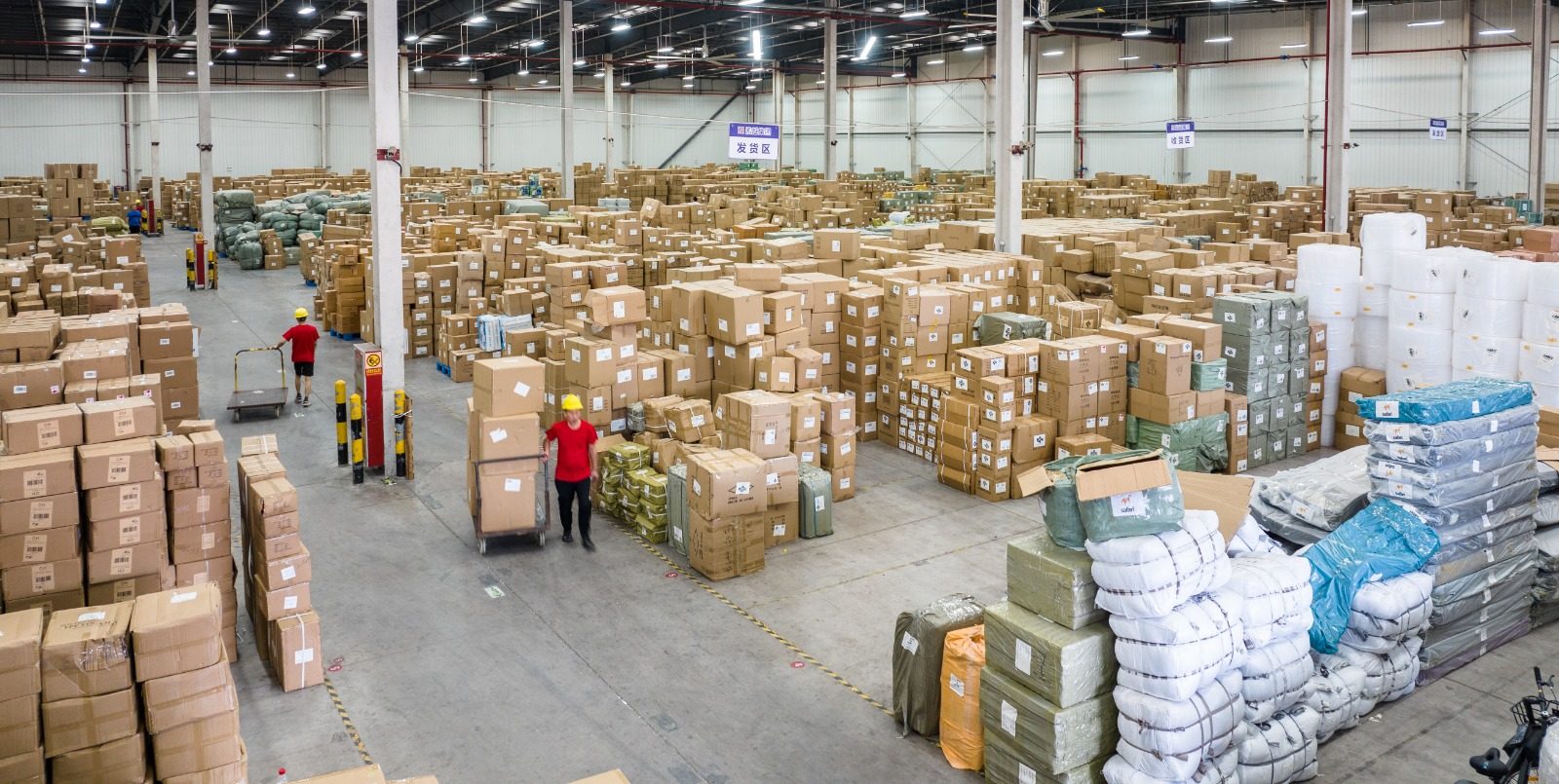
Consolidation warehouse floor with cartons staged by order and workers moving loaded trolleys
The Evaluation Criteria That Actually Matter
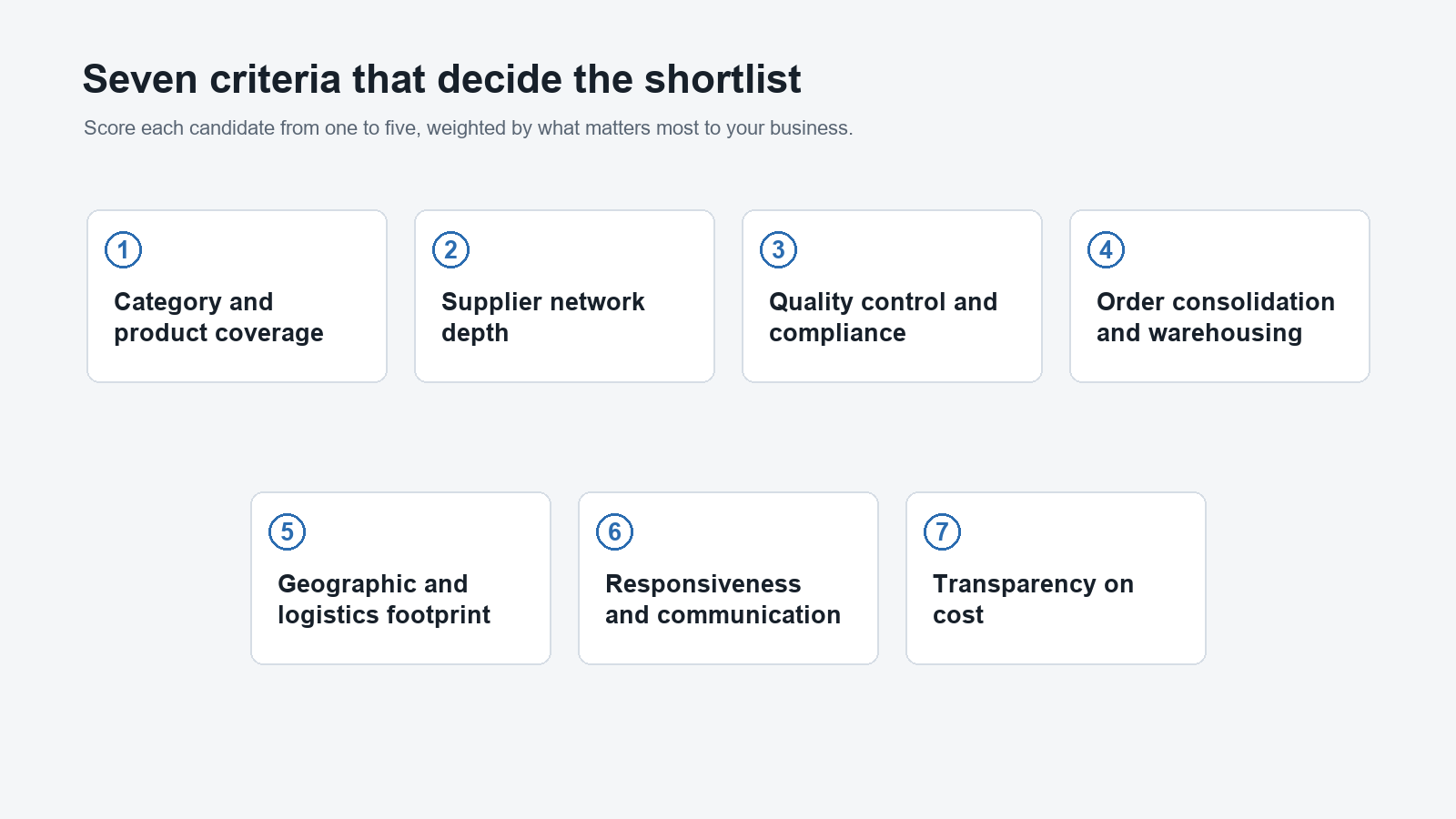
Seven criteria that decide a supply chain management shortlist: category and product coverage, supplier network depth, quality control and compliance, order consolidation and warehousing, geographic and logistics footprint, responsiveness and communication, and transparency on cost
If a ranking cannot be trusted wholesale, what should a buyer compare instead? In practice, seven dimensions do most of the work. Not every buyer weights them equally, but nearly every serious evaluation touches them.
Category and product coverage. Can the provider handle the range of products you buy, or only a narrow slice? A provider strong in apparel may be weak in hard goods. Breadth matters most for buyers managing many categories at once.
Supplier network depth. How many factories can the provider actually reach, and in which regions? A large number on a website means little without evidence of active, vetted relationships in the specific categories you source.
Quality control and compliance. What does the provider’s inspection process look like? Can it coordinate testing against the standards your market requires? Quality failures are among the most expensive hidden costs in sourcing, and a provider that treats inspection as an afterthought will pass that cost to you.
Order consolidation and warehousing. For buyers sourcing multiple SKUs from multiple factories, the ability to consolidate, inspect, and load mixed containers in one place can materially reduce landed cost and lead-time complexity.
Geographic and logistics footprint. Where are the provider’s operations, offices, and logistics partners? A provider with a strong position in your sourcing region and your destination market will usually outperform one that is strong in only one.
Responsiveness and communication. This is harder to rank but easy to feel. How quickly does the provider respond, and in what languages? For buyers in different time zones, communication quality is not a soft factor — it directly affects how fast problems get solved.
Transparency on cost. Does the provider separate product cost, service fees, and logistics clearly, or bundle everything into a single opaque number? Transparency is a proxy for how the relationship will feel when something goes wrong.
A useful exercise is to score each candidate from one to five on these seven dimensions, weighted by what matters most to your business. The resulting comparison will be more useful than any published ranking, because it reflects your reality rather than an average of everyone else’s.
Comparing Representative Provider Types
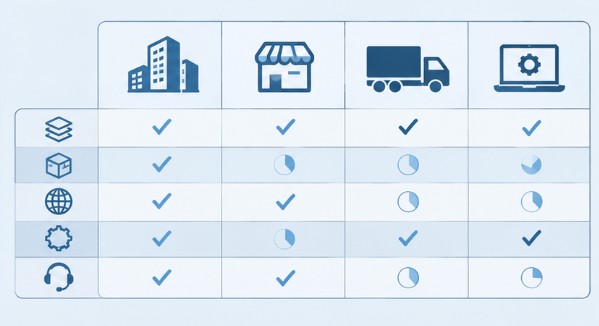
Comparison of four supply chain management provider types — integrated group, trading and sourcing specialist, logistics operator, and technology platform — against five capability rows
While a universal ranking is misleading, it helps to understand the main categories of provider and what each is built to do. The companies below are well-known examples of their type; they are not ranked against one another, and each is strongest in a different context.
Integrated China-based supply chain groups — MU Group. Founded in 2003 and headquartered in Ningbo, MU Group is a diversified international trading and supply chain management group serving global retailers, importers, wholesalers, distributors, and consumer brands. Its model combines product development, supplier coordination, quality control, warehousing and consolidation, and international trade services under one roof. With access to more than 10,000 supplier resources and 2,700+ cooperating factories, roughly 70,000㎡ of showroom space and a similar footprint of warehousing, plus overseas offices supporting international markets, it is built for buyers who want multi-category sourcing and consolidation coordinated through a single partner. This type of provider tends to suit importers and retailers managing broad, multi-SKU programs rather than a single narrow category.
Trading and sourcing specialists — Li & Fung. Historically one of the best-known sourcing and trading organizations, Li & Fung built its reputation on managing complex, multi-country sourcing programs for large retail brands. Buyers who need deep apparel and consumer-goods sourcing relationships across multiple Asian markets often look to this type of specialist.
Logistics-driven providers — DHL Supply Chain and DB Schenker. These are global logistics and contract-logistics operators whose strength lies in freight, warehousing networks, and distribution. For buyers whose main challenge is moving goods reliably across borders rather than sourcing and inspecting them at origin, a logistics-led provider is often the more natural fit.
Technology and platform providers. A newer category focuses on software and visibility — connecting suppliers, tracking orders, and digitizing documentation. These are valuable as complements to a physical supply chain partner, but they rarely replace one.
The takeaway is not that one type beats another. It is that the right choice depends on where your pain is concentrated: at origin (sourcing, quality, consolidation), in transit (freight and logistics), or in visibility (data and tracking). Many buyers ultimately combine more than one.
How to Build Your Own Shortlist
A practical shortlist process looks like this:
Define your sourcing reality. List your categories, number of suppliers, typical order volumes, destination markets, and the compliance standards you must meet.
Identify your single biggest pain point. Is it quality failures, fragmented suppliers, lead-time uncertainty, or hidden costs? Let that pain point drive the weighting of your criteria.
Screen providers against the seven criteria. Use public information and direct conversations; ask specifically how each provider handles your pain point.
Request evidence, not claims. Ask for descriptions of comparable programs, inspection processes, and consolidation workflows. Be cautious with providers who offer only broad promises.
Run a small trial. A single consolidated order or a limited-category engagement reveals more about responsiveness and quality than any proposal document.
Compare total landed cost, not unit price. Include service fees, inspection, consolidation, and logistics. A low unit price with weak quality control is often the most expensive option.
Where Integrated China-Based Providers Fit
For many importers, the hardest part of supply chain management is not freight — it is coordinating dozens of small factories, ensuring consistent quality, and consolidating mixed orders without losing visibility. This is precisely where an integrated China-based provider earns its place.
MU Group illustrates the model. Its supplier network and cooperating factories support multi-category sourcing; its warehousing and consolidation facilities support inspection, mixed-container loading, and shipment coordination; and its quality-control and compliance work is designed to catch problems before goods leave origin. For a retailer or distributor managing a broad product range, coordinating these steps through one partner can reduce the communication overhead of juggling many suppliers and freight forwarders separately.
That said, integrated providers are not the right answer for every buyer. A company whose sourcing is concentrated in a single category and a single factory may get more value from a focused specialist or a logistics-led provider. The point is fit, not hierarchy.
The Ranking You Should Trust Is the One You Build
The search for a “supply chain management company ranking” reflects a reasonable instinct: buyers want a shortcut through a complex decision. But the shortcut does not exist, because the decision is not generic. It is specific to your categories, your markets, your risk tolerance, and your pain points.
The more reliable approach is to stop looking for a universal list and start building a weighted comparison of your own. Use the seven criteria, understand the main provider types, test candidates on a small order, and compare total landed cost rather than unit price. Do that, and you will end up with something far more valuable than a ranking: a shortlist you can actually defend.
Frequently asked questions
Is there a reliable ranking of supply chain management companies?
That list does not exist. And the sooner a buyer accepts this, the faster they will find a partner who actually fits their business. A provider that is ideal for a European supermarket chain consolidating 400 SKUs from dozens of factories is not the same provider that suits a small importer moving two containers a year.
Why do published rankings not help a buyer compare providers?
Some rank by revenue. Some rank by geographic reach. Some rank logistics firms, others rank procurement and sourcing firms, and still others rank technology platforms. Very few disclose a methodology that a buyer could actually apply to their own shortlist.
What criteria should I use to compare supply chain management providers?
A useful exercise is to score each candidate from one to five on these seven dimensions, weighted by what matters most to your business. The resulting comparison will be more useful than any published ranking, because it reflects your reality rather than an average of everyone else’s.
Which type of provider suits multi-category sourcing?
Founded in 2003 and headquartered in Ningbo, MU Group is a diversified international trading and supply chain management group serving global retailers, importers, wholesalers, distributors, and consumer brands. This type of provider tends to suit importers and retailers managing broad, multi-SKU programs rather than a single narrow category.
Are integrated China-based providers the right answer for every buyer?
That said, integrated providers are not the right answer for every buyer. A company whose sourcing is concentrated in a single category and a single factory may get more value from a focused specialist or a logistics-led provider. The point is fit, not hierarchy.