
The fair is the easy part. Three weeks after it closes, most buyers are holding forty cards, a dozen catalogues and two samples, and without a system half of those contacts quietly go cold — not because the suppliers were wrong, but because the follow-up had no structure: quotes in different currencies and incoterms, MOQs that do not fit a container, samples that arrive without a spec sheet, and no single record of what was promised when.
These seven steps are the sequence that holds. Each one ends with a document, and that document is what the next step reads.
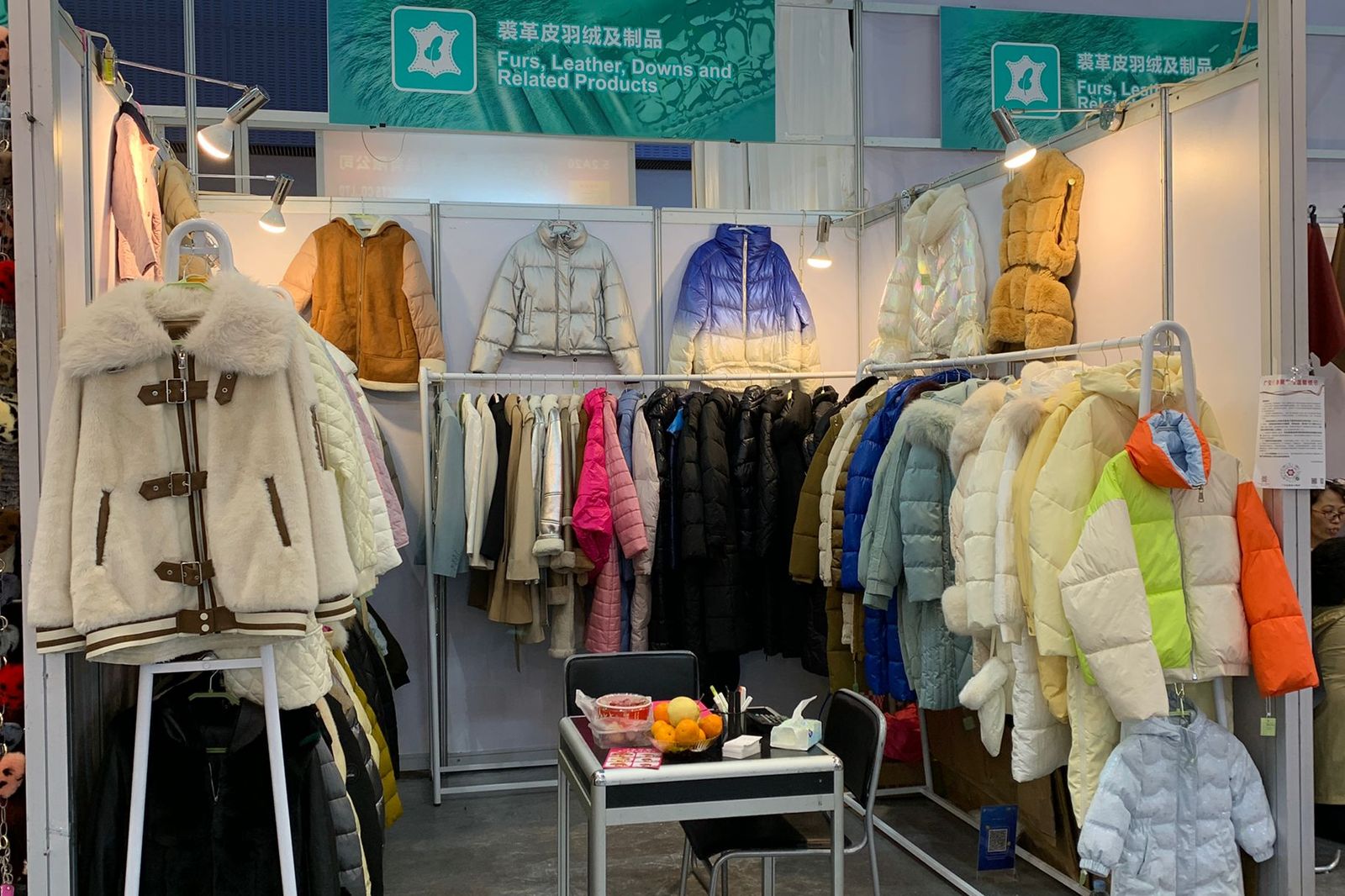
1. Sort the list before you email anyone
Start with triage, not outreach. Forty cards is not forty leads; it is usually six or seven that fit what you actually buy.
Build one sheet with five columns: product, maker or trader, MOQ, lead time, and price basis. Then apply three filters before you write a single email.
-
MOQ against the container. A supplier who cannot fill a container and cannot split one is a supplier for a later order, not this one.
-
Lead time against the season. Work backwards from the date the goods have to be on shelf, not forwards from today.
-
Export record against your market. A supplier with no shipments to your region may still be right, but you need to know before you discover it at the port.
Keep the catalogue, the quotation and the photo you took at the stand against each supplier’s name. In three weeks you will not remember which hall the fourth card came from, and the photo is often the only record of what the sample actually looked like.
Practical note: manage this in a comparison sheet, not in business cards and chat history. The sheet is the thing you will still be reading in January.
2. Compare offers on one template
A low unit price is not a low landed cost. The gap between the two is where most post-fair budgets quietly break.
Before any number is compared, normalise the basis:
| What to fix | Why it decides the comparison |
|---|---|
| Incoterm | An EXW price from a market stall and an FOB price from a factory are not the same number; someone pays the inland leg and the loading |
| Packaging | Included or extra, and at what carton count — printed colour boxes can move the unit cost more than the product |
| Payment terms | 30% deposit against 100% upfront changes your cash requirement, not the price |
| Price validity | A quote valid for 15 days is a different offer from one valid for 90 |
| Specification tolerance | The same product at a wider tolerance is a different product |
| Tooling and setup | Amortised into the unit price, or invoiced once — and who keeps the mould |
Ask every supplier to re-quote on the same template. What is left different afterwards is capability, which is what you were trying to compare in the first place.
One sheet, one basis, before anything is compared — that is the first thing we do with a post-fair list, because until it is done the comparison is between quotation formats rather than between suppliers.
3. Verify who you are actually buying from
Whether a company makes the product or buys it matters less than three questions: who controls the line, who signs the specification, and who absorbs the rework if it goes wrong.
Check the business licence scope, the export record for your market, the actual production site rather than the showroom, capacity against your forecast, and whether a quality process exists in writing or only in conversation.
For an order above a certain value, a site visit costs less than the first rework. If a visit is not practical, a third-party audit is the next best thing — as long as you read the findings rather than the score.
Two things decide the answer more than the paperwork does: whether the line is running your product this week, and who signs the specification. When we visit a factory for a buyer, those are the two things we photograph.
4. Run one sample round, properly
One round, several suppliers, the same written brief. Score against a checklist, not against memory.
What the sample has to arrive with:
-
A spec sheet — material composition, weight, dimensions with tolerance
-
A packaging mock-up, not a description of one
-
The price at your real volume, not at MOQ
-
Test reports for the requirements of your market
Keep the approved sample. It becomes the production reference and the physical answer the first time a bulk shipment is argued about.
If you are checking samples while still at the fair, the Phase 3 buyer guide covers what to inspect in the hall, before the sample is shipped home.
Same light, same measuring method, numbered against the same brief. A sample photographed on the supplier’s own desk, under the supplier’s own lighting, answers a different question from the one you are asking — which is why the samples we collect for a buyer are shot side by side with the others.
5. Freeze the specification in writing
This is the step most buyers skip, and it is the one that decides whether steps 6 and 7 run smoothly.
Write down everything that can still change: model and measurements with tolerance, material and colour references, logo and artwork files, packaging and carton marks, quantity and MOQ, the quality standard, and the delivery date.
Then add one rule. Any change after this point is a new price and a new lead time, confirmed in writing. Not because suppliers are dishonest, but because a verbal change has no version number — and a version number is the only thing that lets you tell, three weeks later, which instruction is the current one.
Freezing the spec is also what makes the next two steps checkable. An inspection compares goods against a document; if the document does not exist, the inspection becomes an opinion.
6. Follow production against the schedule, not the ship date
An inspection booked against the estimated departure date finds problems at the moment when there is no time left to fix them. Book it against the production plan instead: a pre-production check, an in-line check at the point where the line is running your product, and a pre-shipment inspection against a defined AQL.
Two things decide whether the date holds — when the sub-materials arrive, and how long printing and packaging take. Packaging is the quiet bottleneck in most orders, and it is the one buyers ask about least.
Then put the holiday calendar next to your own schedule. Chinese New Year falls on 6 February 2027, and factories typically stop for two to three weeks around it. An order placed in November has to be off the line by mid-January to travel before the break; that means inspection in the first week of January, which means the specification has to be frozen in November. This is the chain that makes step 5 urgent rather than tidy.
Booked against the sailing date, a finding turns into a negotiation; booked against the plan, it is still a fix. On the orders we run, that is the difference between a call in December and one in January — and only the December call still has options in it: air-freight part of the order, split the shipment, or take a later sailing.
7. Consolidate before you ship
Buyers who sourced across several halls end up with several suppliers, several finish dates, and one container to fill.
The loading plan is decided by carton dimensions and stackability, not by the order the suppliers appear on your sheet. Goods arrive over two or three weeks, so someone has to receive them, check counts and marks on arrival, and decide what goes into the first container and what waits.
Documents are checked before loading, not after: invoice and packing list that match what is physically in the cartons, HS codes that match the goods, and shipping marks that match the buyer’s instructions. A container sealed with the wrong marks is a problem that travels.
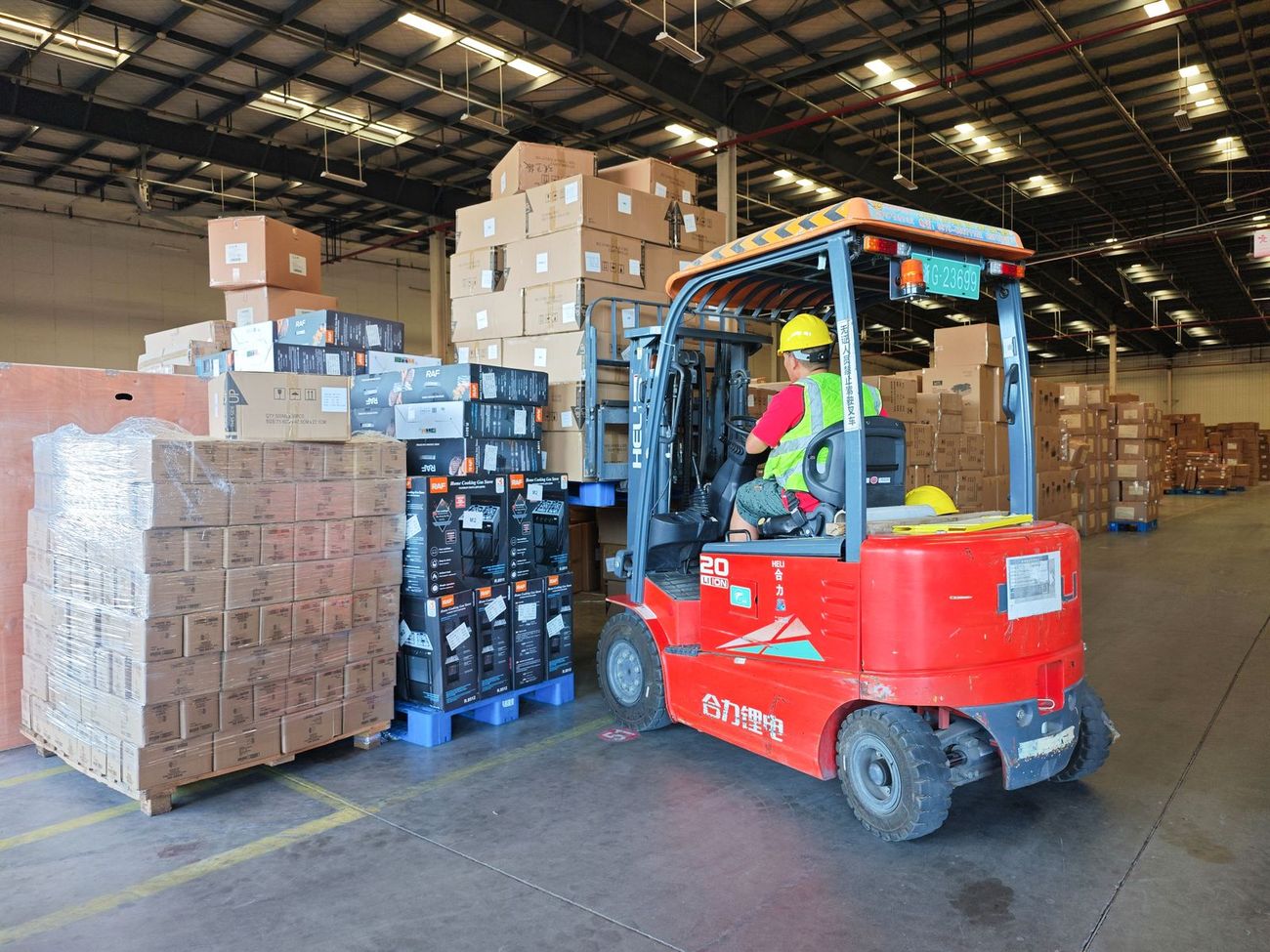
Five suppliers rarely deliver in the same week, so someone has to receive the goods, count them, check the marks and hold them until the container is worth sealing. Our warehouses in Ningbo and Yiwu exist for that gap — free storage during inspection, consolidation and loading, and a loading plan built from carton dimensions rather than from the order the suppliers appear on your sheet. Our Canton Fair service page covers the same arrangement for buyers who are still in Guangzhou.
How MU Group helps buyers turn Canton Fair connections into successful orders
Meeting suppliers at the Canton Fair is relatively easy. Managing everything after the exhibition is often much harder.
Imagine you have found ten promising suppliers across different product categories. Each has different quotations, MOQs, production schedules, packaging requirements and ways of communicating. Some are manufacturers; others are trading companies. You now need to compare their offers, check their capabilities, follow up on samples, monitor production, and eventually bring all the goods together for shipment.
This is where an experienced sourcing partner in China makes a real difference.
MU Group works as an extension of your purchasing team in China, coordinating the sourcing process from supplier selection to final shipment.
With operational teams in Ningbo, Yiwu, Guangzhou and Shantou, MU Group connects buyers with China’s manufacturing and wholesale supply chains across a wide range of product categories.
Rather than simply introducing suppliers, our team supports the purchasing process at different stages:
-
Supplier sourcing and evaluation — identifying suitable manufacturers and suppliers against your product requirements, target price and order quantity.
-
Sample collection and comparison — coordinating samples from different suppliers so you can compare quality, specification and price on one basis before deciding.
-
Factory visits and supplier verification — arranging site visits and supplier assessments so you can see manufacturing capability and production conditions rather than infer them.
-
Production follow-up and quality control — monitoring order progress, coordinating inspections, and identifying quality issues before shipment rather than after arrival.
-
Warehousing and order consolidation — receiving goods from multiple suppliers, holding them in China, and combining separate orders into shipments that can actually be loaded.
-
Shipping coordination — coordinating container loading and international shipping arrangements.
For buyers sourcing several categories from China, the value of this arrangement is not fewer emails. It is that each stage leaves a record: the site that was visited, the specification version that was agreed, the inspection result, the date a supplier committed to. When something goes wrong, the problem can be located instead of reconstructed — and that difference is what keeps a multi-supplier order on schedule.
Whether you have just returned from the Canton Fair with a list of potential suppliers or are still looking for the right products and factories, MU Group can help you move from initial sourcing conversations to an organised purchasing process. What we run across these stages is set out service by service.
Conclusion: the fair gives you options, the next ninety days decide whether they become orders
Most of the loss after a fair is quiet. A quote that was never normalised, so the cheapest-looking supplier was never actually the cheapest. A specification that was never frozen, so two suppliers worked from two different understandings of the same product. An inspection booked against the sailing date instead of the production plan. Five suppliers’ goods arriving in the same week with nobody to receive them.
None of these look like failures at the time. They surface later as a rework charge, a missed sailing, or a margin that disappeared somewhere between the quotation and the invoice.
A buying office exists to keep those records in one place, and most buyers do not have one in China. That is the role MU Group takes: not a supplier introduction service, but your purchasing team on the ground — from the first factory visit to the last carton in the container.
You focus on choosing the right products and growing the business. The sourcing work on the ground in China is what we are set up to run.
If you came home from the fair with a shortlist, send it over. We will tell you what is missing before you place the order.